

72
banner-header-home-en-pc-01_0
banner-header-home-en-mobile-05_0
Vector-Small

News and Activities

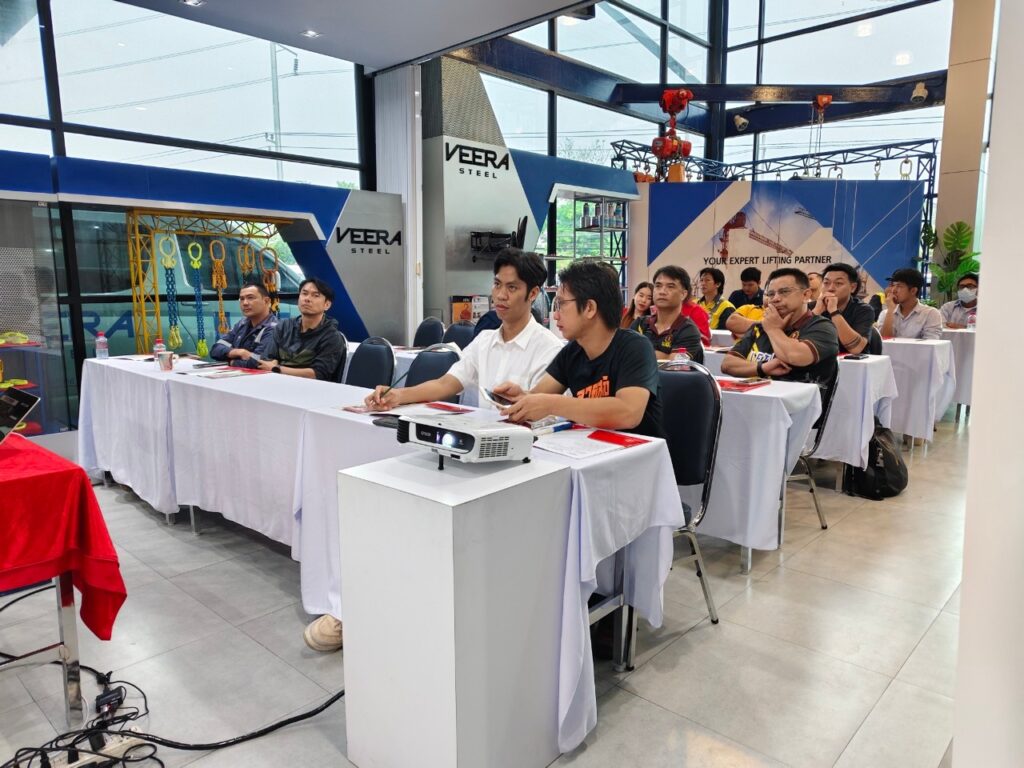
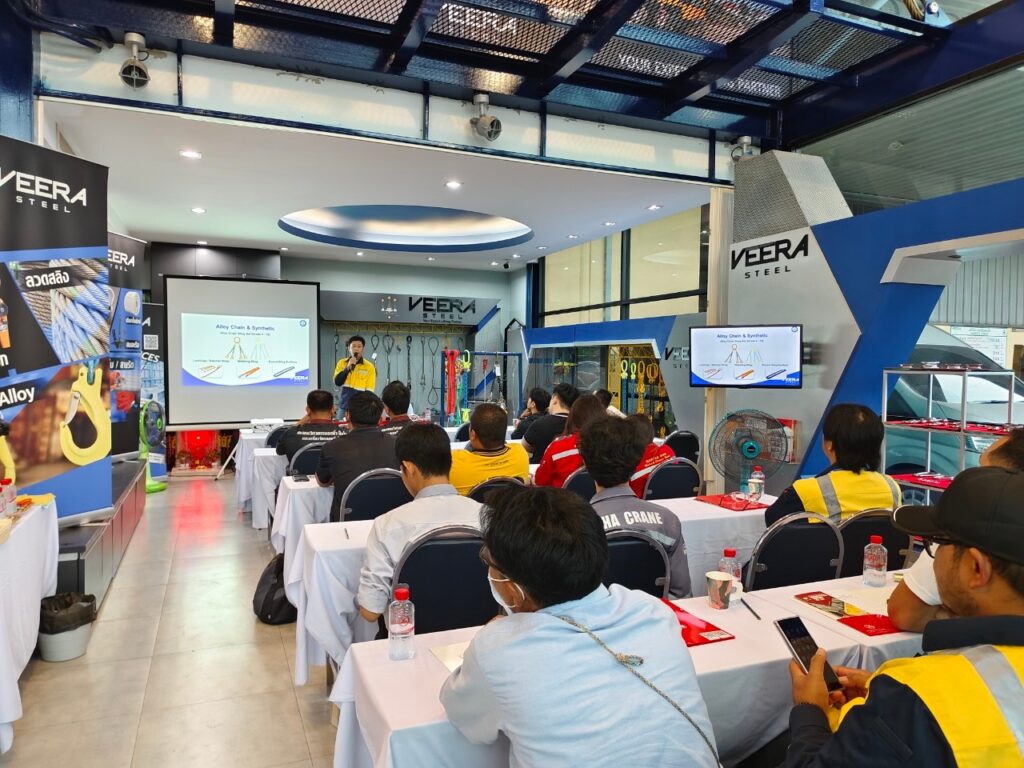
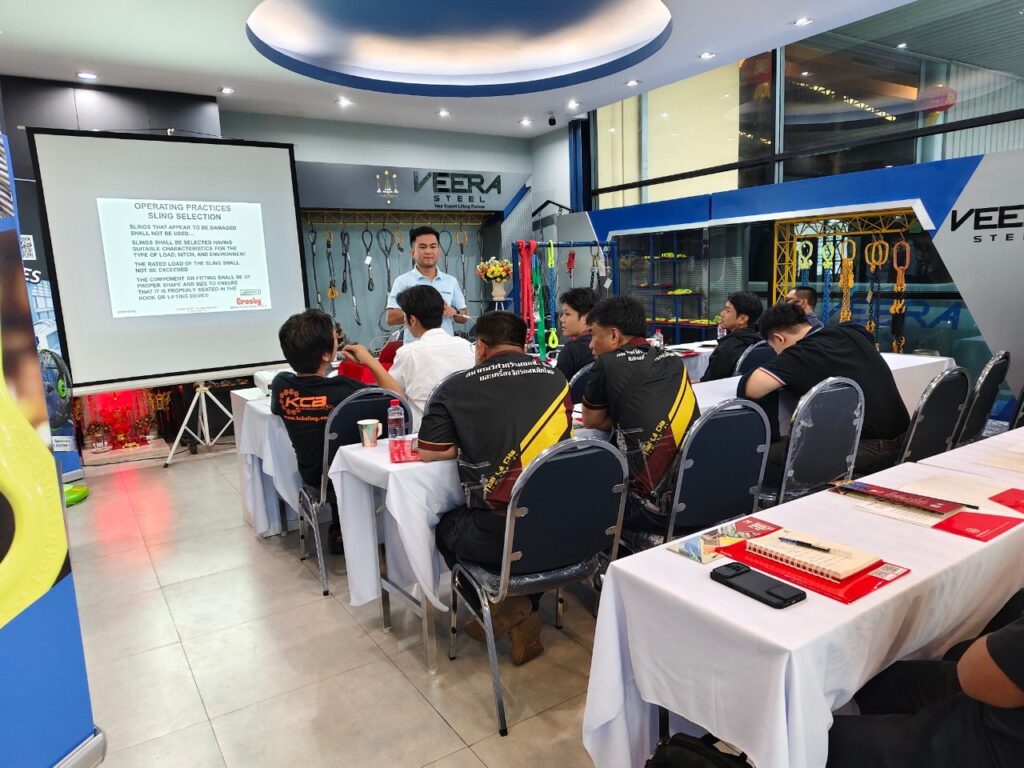
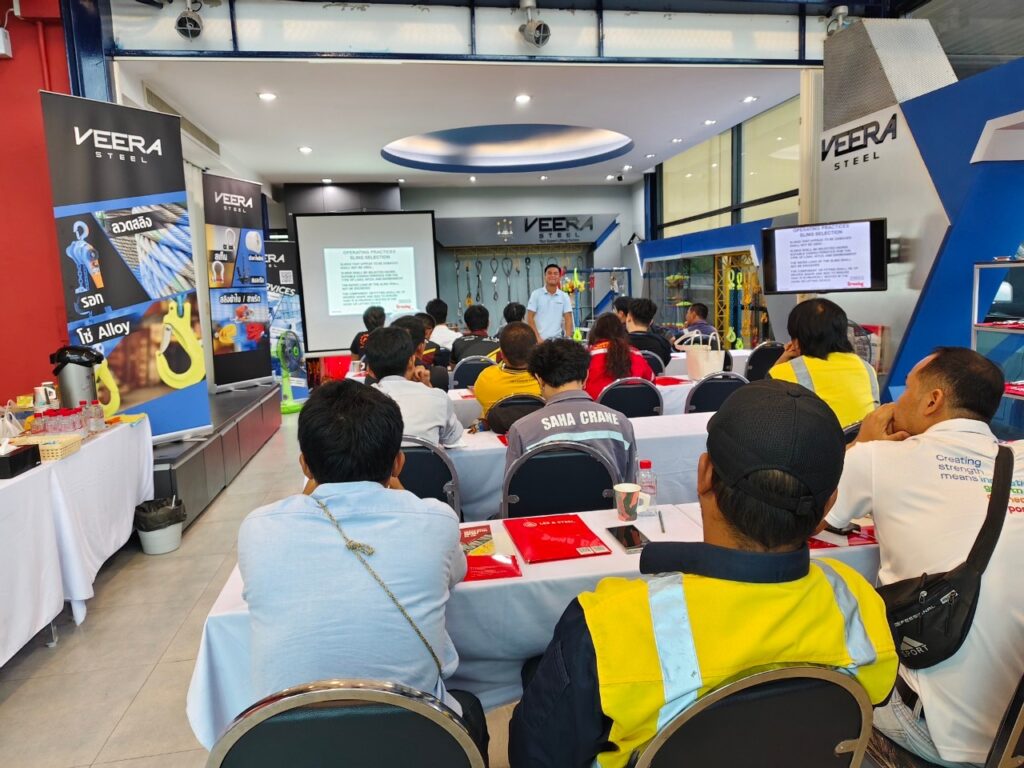
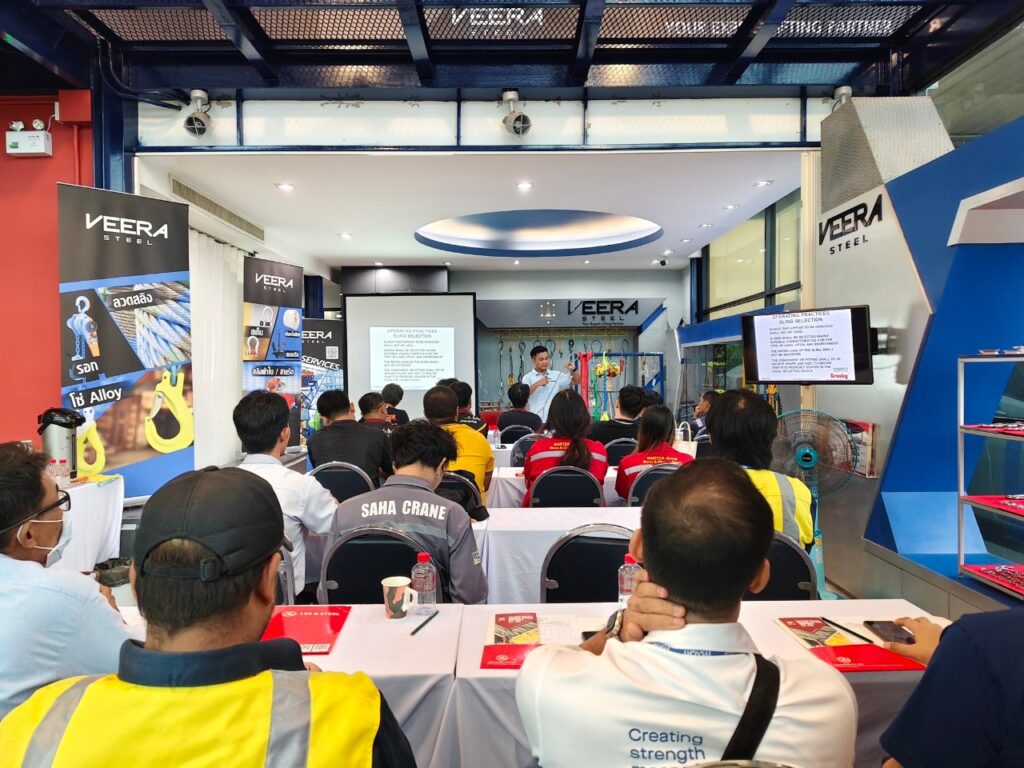
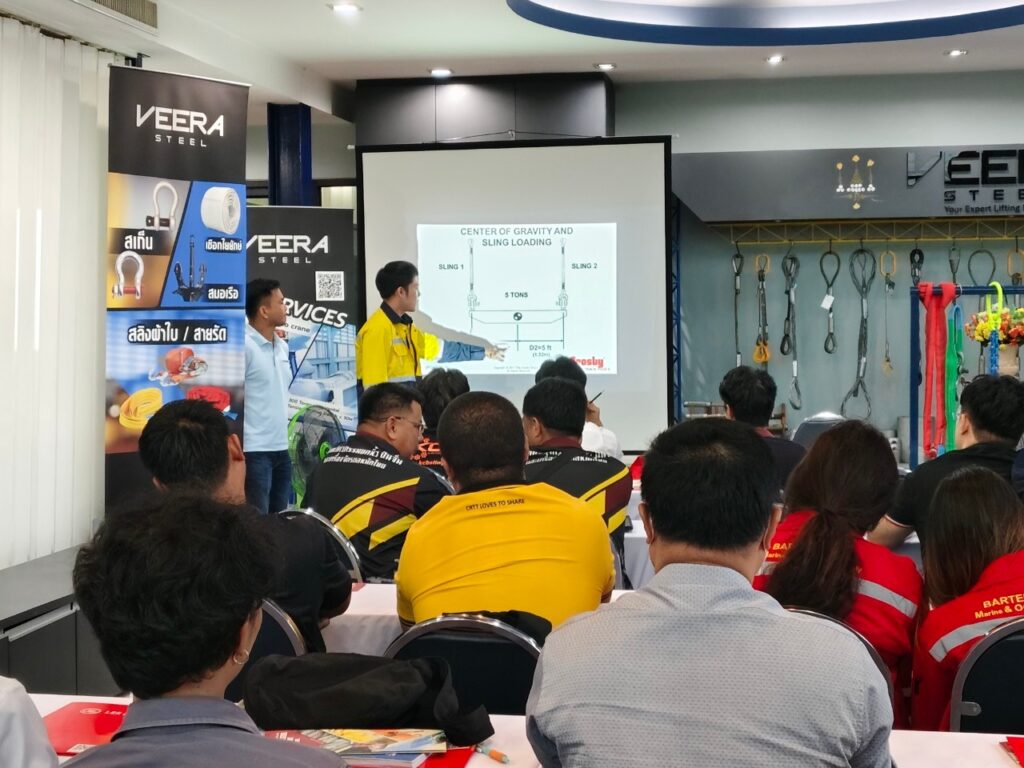
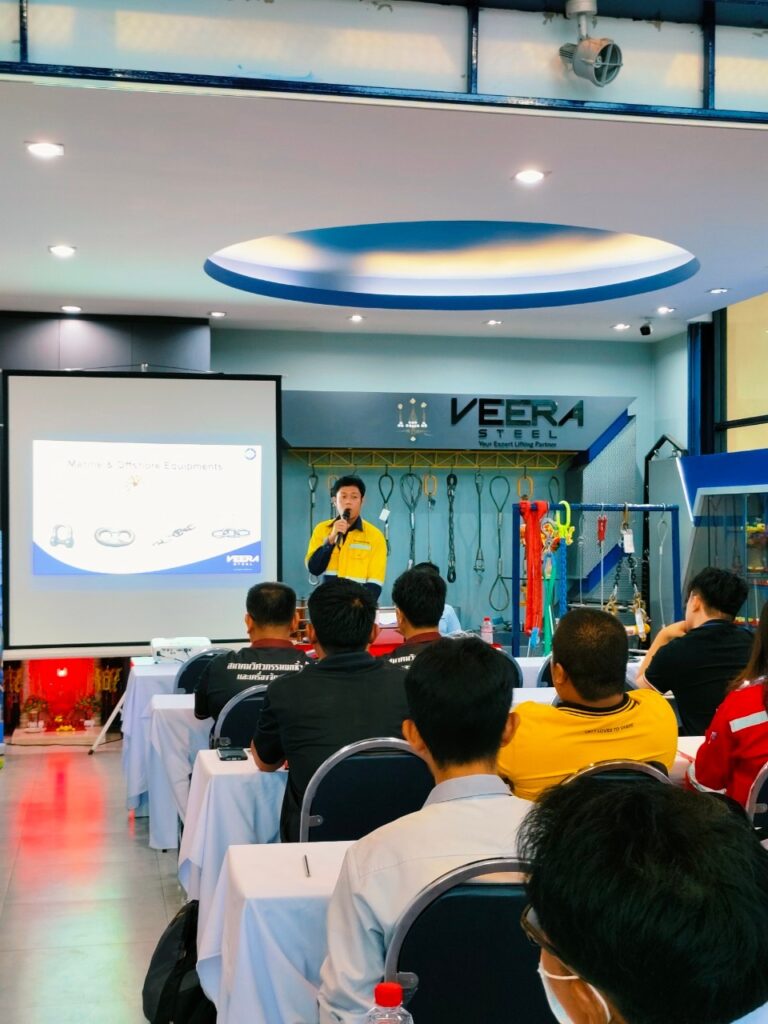
Lifting Equipment and Safe Use 2024

Safety is a critical aspect of all work environments, particularly in operations that involve lifting equipment—where the potential for accidents poses serious risks to both life and property. Each incident can result in significant losses, emphasizing the importance of preventive measures. Lifting equipment plays a vital role across a wide range of industries, and when used correctly by knowledgeable personnel, the likelihood of accidents can be significantly reduced.
Recognizing the importance of safety in lifting operations, Veerasteel Import Co., Ltd., in collaboration with Crosby, a world-renowned manufacturer of lifting equipment with decades of expertise, organized an exclusive training program focused on theoretical knowledge of safe lifting practices.
The objective of this initiative is to enhance the knowledge and experience of participants, equipping them with practical understanding that can be effectively applied in real-world operations. The training also aims to align local practices with international standards and keep professionals up to date with global safety trends.

Shackles: Small Components You Must Never Get Wrong in Industrial Lifting

In lifting and industrial rigging, shackles are critical connection points that directly affect overall safety.
Even when wire ropes or chains meet standards, using the wrong shackle can lead to slippage, failure, or serious accidents.

This article explains what shackles are, how they are used, and how to select the right one for safe operations.


What Is a Shackle?

A shackle is a metal connecting device used in lifting and rigging systems to link wire ropes, chains, hooks, or anchor points.
Its primary function is to safely transfer loads between components under tensile force.

Industry-grade shackles are clearly marked with a Working Load Limit (WLL) and are manufactured and tested by trusted global brands such as Kondotec, Gunnebo, and Crosby, widely recognized in heavy-duty lifting and industrial applications.


Key Benefits of Shackles

  • Enhances safety in lifting and securing systems
  • Provides strong, reliable connections
  • Designed to handle high load capacities
  • Easy to assemble and disassemble on site
  • Simple to inspect before every use

Common Types of Shackles

1. Bow Shackles

  • Rounded shape allows multi-directional loading
  • Ideal for lifting applications using multiple slings

2. D Shackles

  • Designed for straight-line loading
  • Offers better load control in fixed-direction applications

Industrial Applications

  • Construction – Structural lifting and rigging
  • Marine & Port Operations – Mooring and towing
  • Steel Fabrication – Heavy component handling
  • Logistics & Transportation – Securing industrial cargo

Things to Know Before Use

  • Always match the shackle’s WLL to the load
  • Never exceed the rated capacity
  • Inspect for cracks, wear, and damaged pins or threads
  • Do not modify or weld shackles
  • Use only with certified lifting equipment

Contact our team for professional lifting equipment consultation

📞 Consult our engineers for free — Call 089-922-5616

see more...

Wire Rope Ferrules – Small Component, Big Safety Impact

Ferrules may look small, but they play a critical role in wire rope safety. A poor-quality ferrule can lead to rope failure, accidents, or equipment damage.


Product Explanation & Benefits

Ferrules are metal sleeves used to secure the ends of wire ropes, forming loops or preventing fraying. They are essential components in creating safe and certified wire rope assemblies.

Types of Ferrules

1. Aluminium Ferrules Form A

  • Used for forming standard wire rope loops
  • Lightweight and corrosion-resistant

2. Aluminium Ferrules Form C

  • Includes an inspection hole for checking rope alignment
  • Prevents injuries from exposed wire ends
  • Lightweight and corrosion-resistant

3. Steel Ferrules

  • Extremely strong and durable
  • Suitable for heavy-duty applications
  • Built for maximum stability and safety

Key Benefits

  • Ensures safe and secure rope terminations
  • Prevents wire fraying and enhances user safety
  • Compatible with multiple rope sizes
  • Meets industrial lifting and rigging standards

Industries & Applications

  • Construction – Rope slings and general lifting setups
  • Marine & Offshore – Mooring, towing, anchor systems
  • Steel Fabrication – Wire rope assembly and structural applications
  • Logistics – Securing heavy cargo

Things to Know Before Use

  1. Match ferrule size with the wire rope diameter
  2. Use certified hydraulic swaging machines only
  3. Inspect swaged areas before every use
  4. Do not use ferrules with dents or deformation
  5. Ensure installation is performed by trained personnel

📞 Consult our engineers for free — Call 089-922-5616

see more...

Shackles: Small Components You Must Never Get Wrong in Industrial Lifting

In lifting and industrial rigging, shackles are critical connection points that directly affect overall safety.
Even when wire ropes or chains meet standards, using the wrong shackle can lead to slippage, failure, or serious accidents.

This article explains what shackles are, how they are used, and how to select the right one for safe operations.


What Is a Shackle?

A shackle is a metal connecting device used in lifting and rigging systems to link wire ropes, chains, hooks, or anchor points.
Its primary function is to safely transfer loads between components under tensile force.

Industry-grade shackles are clearly marked with a Working Load Limit (WLL) and are manufactured and tested by trusted global brands such as Kondotec, Gunnebo, and Crosby, widely recognized in heavy-duty lifting and industrial applications.


Key Benefits of Shackles

  • Enhances safety in lifting and securing systems
  • Provides strong, reliable connections
  • Designed to handle high load capacities
  • Easy to assemble and disassemble on site
  • Simple to inspect before every use

Common Types of Shackles

1. Bow Shackles

  • Rounded shape allows multi-directional loading
  • Ideal for lifting applications using multiple slings

2. D Shackles

  • Designed for straight-line loading
  • Offers better load control in fixed-direction applications

Industrial Applications

  • Construction – Structural lifting and rigging
  • Marine & Port Operations – Mooring and towing
  • Steel Fabrication – Heavy component handling
  • Logistics & Transportation – Securing industrial cargo

Things to Know Before Use

  • Always match the shackle’s WLL to the load
  • Never exceed the rated capacity
  • Inspect for cracks, wear, and damaged pins or threads
  • Do not modify or weld shackles
  • Use only with certified lifting equipment

Contact our team for professional lifting equipment consultation

📞 Consult our engineers for free — Call 089-922-5616

see more...

News and Activities

Lifting Equipment and Safe Use 2024

Safety is a critical aspect of all work environments, particularly in operations that involve lifting equipment—where the potential for accidents poses serious risks to both life and property. Each incident can result in significant losses, emphasizing the importance of preventive measures. Lifting equipment plays a vital role across a wide range of industries, and when used correctly by knowledgeable personnel, the likelihood of accidents can be significantly reduced.
Recognizing the importance of safety in lifting operations, Veerasteel Import Co., Ltd., in collaboration with Crosby, a world-renowned manufacturer of lifting equipment with decades of expertise, organized an exclusive training program focused on theoretical knowledge of safe lifting practices.
The objective of this initiative is to enhance the knowledge and experience of participants, equipping them with practical understanding that can be effectively applied in real-world operations. The training also aims to align local practices with international standards and keep professionals up to date with global safety trends.
Shackles: Small Components You Must Never Get Wrong in Industrial Lifting

In lifting and industrial rigging, shackles are critical connection points that directly affect overall safety.
Even when wire ropes or chains meet standards, using the wrong shackle can lead to slippage, failure, or serious accidents.

This article explains what shackles are, how they are used, and how to select the right one for safe operations.


What Is a Shackle?

A shackle is a metal connecting device used in lifting and rigging systems to link wire ropes, chains, hooks, or anchor points.
Its primary function is to safely transfer loads between components under tensile force.

Industry-grade shackles are clearly marked with a Working Load Limit (WLL) and are manufactured and tested by trusted global brands such as Kondotec, Gunnebo, and Crosby, widely recognized in heavy-duty lifting and industrial applications.


Key Benefits of Shackles

  • Enhances safety in lifting and securing systems
  • Provides strong, reliable connections
  • Designed to handle high load capacities
  • Easy to assemble and disassemble on site
  • Simple to inspect before every use

Common Types of Shackles

1. Bow Shackles

  • Rounded shape allows multi-directional loading
  • Ideal for lifting applications using multiple slings

2. D Shackles

  • Designed for straight-line loading
  • Offers better load control in fixed-direction applications

Industrial Applications

  • Construction – Structural lifting and rigging
  • Marine & Port Operations – Mooring and towing
  • Steel Fabrication – Heavy component handling
  • Logistics & Transportation – Securing industrial cargo

Things to Know Before Use

  • Always match the shackle’s WLL to the load
  • Never exceed the rated capacity
  • Inspect for cracks, wear, and damaged pins or threads
  • Do not modify or weld shackles
  • Use only with certified lifting equipment

Contact our team for professional lifting equipment consultation

📞 Consult our engineers for free — Call 089-922-5616

see more...