
In industrial lifting systems, the hook is a critical connection point between lifting equipment and the load. Even when chains or wire ropes meet industrial standards, using an unsuitable hook or exceeding its rated capacity can put the entire lifting system at risk.
Global lifting brands such as Crosby, Gunnebo GrabiQ, and YOKE place strong emphasis on hook quality and safety because the hook is one of the key components in a professional lifting system.
Product Explanation & Benefits
Industrial Hooks are metal components used to connect chains, wire ropes, or lifting slings to a load. They transfer force from the lifting equipment directly to the load and are designed for controlled, reliable lifting operations.
Hooks from reputable manufacturers such as Crosby, GrabiQ (Gunnebo), and YOKE are designed with a clearly marked Working Load Limit (WLL), supported by testing and quality control in accordance with lifting industry requirements.
Key Benefits of Industrial Hooks
• Enhances overall lifting system safety
• Provides secure and reliable load connections
• Designed for high load capacities
• Helps reduce the risk of accidental disengagement or incorrect use
• Easy to inspect before operation
Common Types of Industrial Hooks
Safety Hooks
Designed to help prevent accidental release during lifting and provide a more secure connection between lifting equipment and the load.
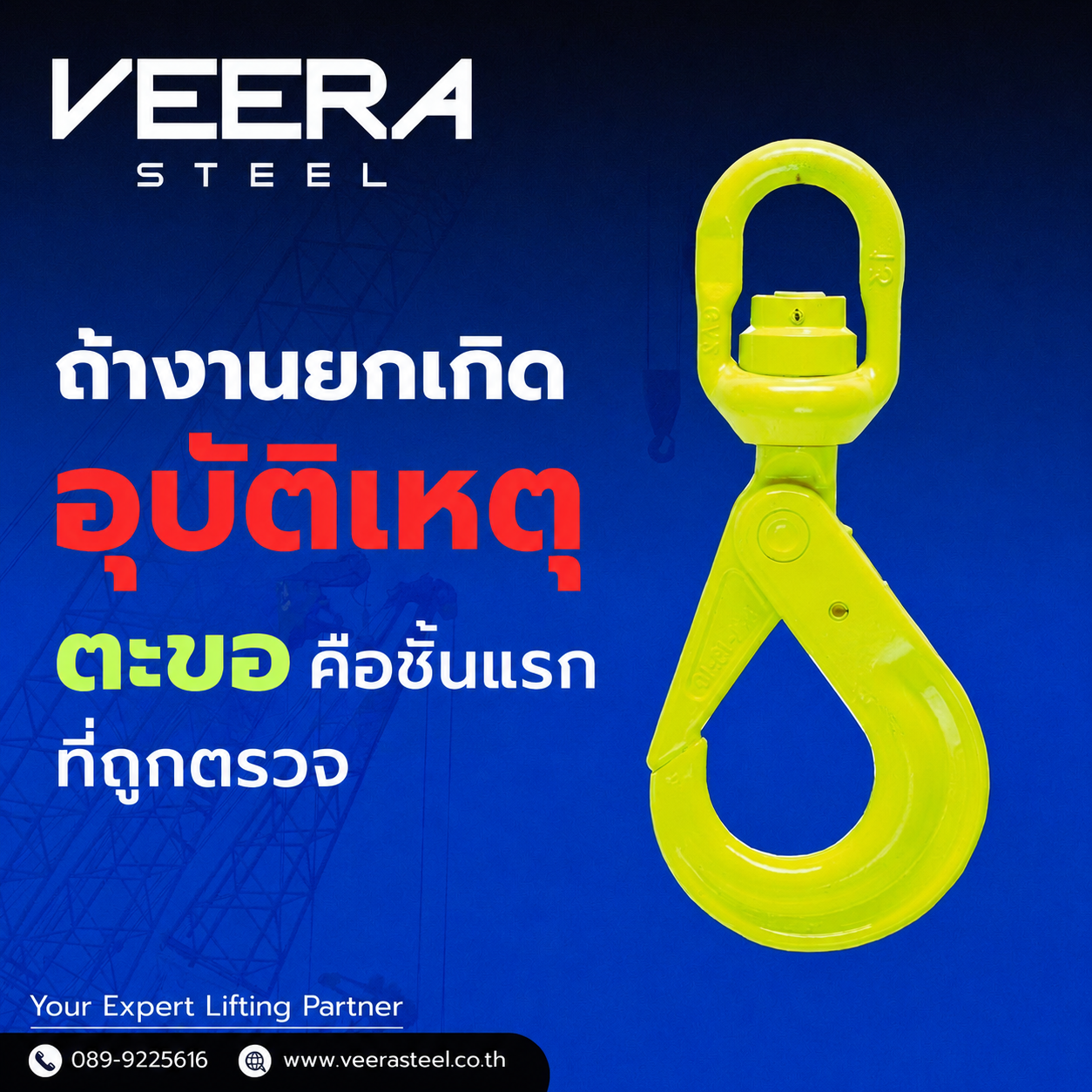
Swivel Hooks
Help reduce torsional stress and are suitable for applications where the load may rotate or change direction during operation.
Industries & Applications
• Construction – Structural lifting of beams, columns, and steel structures
• Manufacturing – Handling machinery, molds, and heavy components
• Marine & Port Operations – Securing and moving equipment
• Logistics & Warehousing – Industrial lifting and material handling
Things to Know Before Use
1. Match the hook to the load weight and application
2. Never exceed the manufacturer’s rated WLL
3. Inspect hooks for cracks, wear, deformation, and safety latch condition before use
4. Do not modify, weld, or repair hooks yourself
5. Use lifting components from reputable manufacturers and within a properly matched lifting system
📞 Consult our engineers for free — Call 089-922-5616
In lifting and industrial rigging, shackles are critical connection points that directly affect overall safety.
Even when wire ropes or chains meet standards, using the wrong shackle can lead to slippage, failure, or serious accidents.
This article explains what shackles are, how they are used, and how to select the right one for safe operations.
A shackle is a metal connecting device used in lifting and rigging systems to link wire ropes, chains, hooks, or anchor points.
Its primary function is to safely transfer loads between components under tensile force.
Industry-grade shackles are clearly marked with a Working Load Limit (WLL) and are manufactured and tested by trusted global brands such as Kondotec, Gunnebo, and Crosby, widely recognized in heavy-duty lifting and industrial applications.
Contact our team for professional lifting equipment consultation
📞 Consult our engineers for free — Call 089-922-5616

In industrial lifting systems, the hook is a critical connection point between lifting equipment and the load. Even when chains or wire ropes meet industrial standards, using an unsuitable hook or exceeding its rated capacity can put the entire lifting system at risk.
Global lifting brands such as Crosby, Gunnebo GrabiQ, and YOKE place strong emphasis on hook quality and safety because the hook is one of the key components in a professional lifting system.
Product Explanation & Benefits
Industrial Hooks are metal components used to connect chains, wire ropes, or lifting slings to a load. They transfer force from the lifting equipment directly to the load and are designed for controlled, reliable lifting operations.
Hooks from reputable manufacturers such as Crosby, GrabiQ (Gunnebo), and YOKE are designed with a clearly marked Working Load Limit (WLL), supported by testing and quality control in accordance with lifting industry requirements.
Key Benefits of Industrial Hooks
• Enhances overall lifting system safety
• Provides secure and reliable load connections
• Designed for high load capacities
• Helps reduce the risk of accidental disengagement or incorrect use
• Easy to inspect before operation
Common Types of Industrial Hooks
Safety Hooks
Designed to help prevent accidental release during lifting and provide a more secure connection between lifting equipment and the load.
Swivel Hooks
Help reduce torsional stress and are suitable for applications where the load may rotate or change direction during operation.
Industries & Applications
• Construction – Structural lifting of beams, columns, and steel structures
• Manufacturing – Handling machinery, molds, and heavy components
• Marine & Port Operations – Securing and moving equipment
• Logistics & Warehousing – Industrial lifting and material handling
Things to Know Before Use
1. Match the hook to the load weight and application
2. Never exceed the manufacturer’s rated WLL
3. Inspect hooks for cracks, wear, deformation, and safety latch condition before use
4. Do not modify, weld, or repair hooks yourself
5. Use lifting components from reputable manufacturers and within a properly matched lifting system
📞 Consult our engineers for free — Call 089-922-5616